







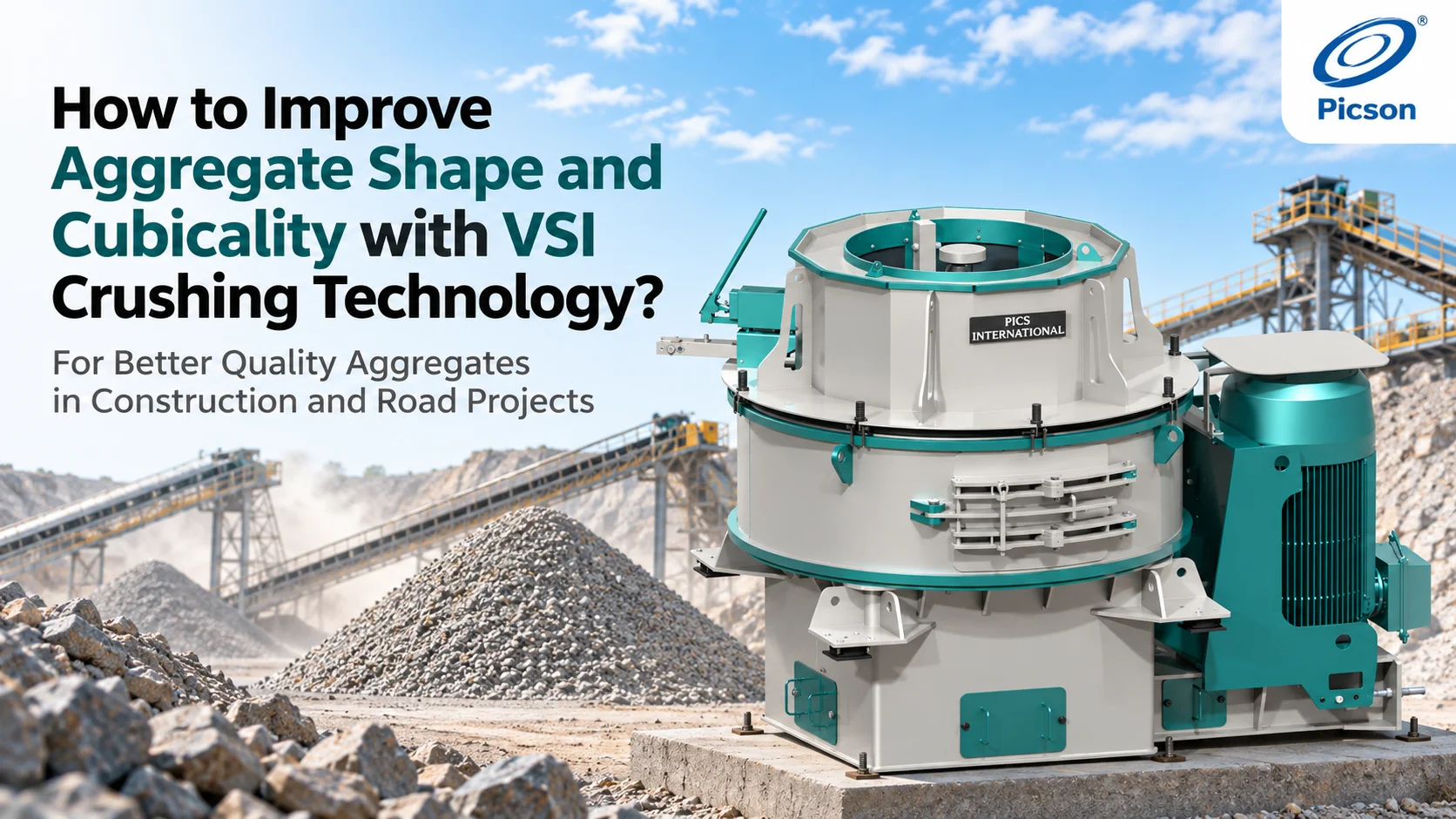
Meta: VSI aggregate shaping without the brochure gloss, why the stone keeps coming out flaky, what a vertical shaft impactor does about it, and what it'll cost you in fines and wear parts along the way.
The lab report came back with the flakiness number circled in red pen, again, and the ready-mix customer's QC man has started turning up at the weighbridge with his own sieves and a slotted gauge in the back of his car. Sooner or later the talk at that sort of quarry turns to VSI aggregate shaping, and by then somebody's normally had a go at the cone setting both ways and put new cloth on the screen, and the flaky bits are still sitting there on the belt like nothing happened.
So Why's the Stone Coming Out Flaky?
Partly the rock. Some of it just likes splitting into slabs, a laminated basalt or a schisty granite, and no machine fully talks it out of that. But a good share comes down to how the cone gets run, because a cone that's starved of feed, or set to take too big a bite in one go, cracks rock between two steel faces and lets the long thin pieces slip through edgeways.
Crouch down next to the stockpile and you'll spot it, stone that looked like decent 20 mm from up in the loader cab is half chips and slivers once it's right in front of your nose. Ready-mix people don't like that one bit, the flat stuff eats more cement paste and won't pack down properly, and in asphalt it tends to snap when the roller goes over, so the customers who actually test end up shaving the price or turning a truck round at the gate.
What's a Vertical Shaft Impactor Doing in There, Then?
It throws the rock instead of squeezing it. Feed drops into the middle of a rotor that's spinning fast enough you can hear the whine from the site office, gets flung outwards, and smacks into either a ring of steel anvils or a wall of its own crushed stone packed into the chamber.
Hit that hard, stone tends to give way at its weak spots, so the thin edges and sharp corners snap off first and what's left comes out chunkier, a lot nearer to a cube. Pretty much that's how a VSI gets you cubical aggregate production, nothing cleverer, and you'll notice the plants supplying concrete and asphalt buyers tend to stick one right at the tail end of the line, once the jaw and the cone have already got the size down.
Steel Anvils, or Let the Rock Hit Itself?
This one causes more arguments than it should. With rock-on-anvil the rotor fires stone at steel anvils, it breaks harder and makes more sand, which is handy if there's an M-sand buyer down the road, but on abrasive rock the anvils and rotor tips go quickly and somebody's in there with a spanner far more often than anyone budgeted for.
Rock-on-rock lets crushed stone build up as a lining inside the rotor and the chamber, so most of the hits end up being stone against stone. Wear drops a lot and the shaping is gentler, more knocking off corners than real crushing, which is often just what people buy a VSI crusher for aggregate to do, though on really hard, high-silica rock even that lining gets eaten faster than you'd hope.
VSI vs Cone as the Last Stage
A rough comparison only, it moves around a lot with the rock and how each machine is set.
| Factor | Cone crusher | VSI |
|---|---|---|
| How it breaks | Squeezes rock between steel | Throws rock at anvils or at rock |
| Product shape | Fine if choke-fed, flaky if starved | Usually more cubical |
| Fines made | Fewer | More, often sold as sand |
| Feed size | Takes bigger lumps | Smaller, check the model's limit |
| Wear parts | Mantle and concave | Tips, shoes, anvils or rotor plates |
| Wet, clayey feed | Copes reasonably | Can cake up inside the rotor |
| Usual job | Secondary and tertiary crushing | Final shaping and sand making |
There's a cost hiding in that fines row. Every pass through a VSI turns some of the stone into dust and sand, and if nobody nearby wants crusher dust or M-sand the pile out the back grows by the week, so an aggregate shaping machine really only pays its way when the cubical aggregate sells for enough more to cover what's lost, or the fines have a buyer of their own.
Getting Better VSI Aggregate Shaping From What You Have
Rotor speed is the big knob. Wind it up and the stone comes out rounder and more cubical but you make more fines and go through wear parts quicker, wind it down and the shaping gets lazy, and most plants end up nudging it a little at a time while the lab runs flakiness tests on every change.
Feed matters nearly as much. A VSI does its best shaping when the feed's screened to a fairly narrow band and turns up steady rather than in surges, and wet clay-coated stone is pretty much asking for build-up inside the rotor. Plenty of machines also let a share of the feed cascade round the rotor instead of through it, which lifts tonnage and trims the fines a bit, though you give up some shaping for it. And putting the VSI in a loop with a screen, so anything oversize goes back for another go, tends to tighten up the product more than fiddling with any one setting.
What to Check Before Buying an Aggregate Shaping Machine
| Factor | What to look at |
|---|---|
| Rock | Hardness, abrasiveness and silica content |
| Current flakiness | Last few lab reports, size by size |
| Buyer specs | Flakiness and elongation limits each customer works to |
| Feed | Size coming off the cone, and how steady it is |
| Fines | Whether anyone will buy the sand or dust |
| Wear parts | Price and lead time for tips, shoes and anvils |
| Power | Motor size and whether the supply can take it |
Conclusion
A VSI won't turn awkward rock into perfect stone, and run too hard it mostly just makes sand. Pull a few weeks of flakiness results, see how far off spec you really are, and if a supplier offers a trial on your own rock take it, because a short run on your feed tells you more than any brochure. For machine details the Vertical Shaft Impactor for Aggregate Shaping and Vertical Shaft Impactor pages are worth a read, and the PICS International team can be reached through the Contact Us page.