







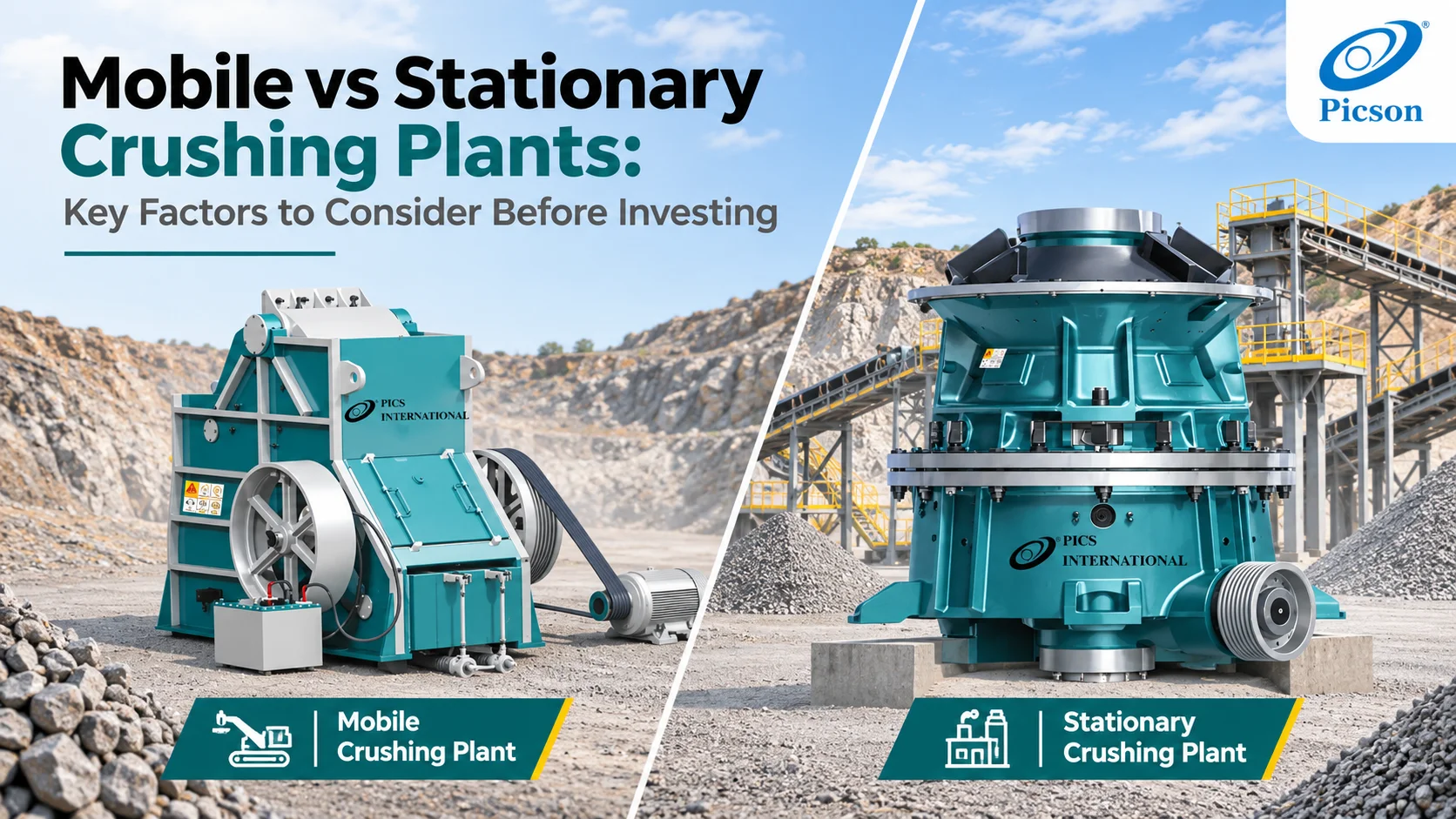
A contractor gets a road job, and the nearest quarry is about 40 km from the site. Then the transport quote for the stone comes in, and it's so high that somebody in the office calls the transporter back just to check they didn't add a zero by mistake. That's usually when the old talk starts again: should we buy a mobile crushing plant and take it to the rock, or put the money into a stationary crushing plant at the quarry and keep sending trucks? Most people in the room have already picked a side on mobile vs stationary crushing plant before anyone opens a calculator.
How Does a Mobile Crushing Plant Save Money?
Mostly on trucks. With a mobile stone crusher, you've got the crusher itself, jaw or cone or impact type, sitting on tracks or wheels, the feeder and belt are part of the same machine, and most of them carry their own diesel engine too, so it comes on a trailer, drives off on its own and can be crushing in a few days, sometimes the same day if the ground's been levelled for it.
People don't really see the transport cost until they sit down and add it up. Think about it: each tonne of stone gets moved twice, first as raw rock going to the crusher and then again as finished stone going to the buyer, and if the crusher is standing right next to the rock face or on the demolition site, well, that first trip just isn't there anymore. Road jobs, short quarry leases, old buildings being knocked down, contract crushing where the site keeps changing—that's the kind of work where mobile units make their money.
Where Does a Stationary Crusher Plant Do Better?
Big tonnage, from one place, for years. Go and walk around a stationary crusher plant one day and it's mostly concrete and steel you see: crushers fixed on concrete bases, screens two or three decks high, long belts going out to stockpiles so big a loader disappears behind them, and nobody has any plan of moving it—it just stays there till the quarry is finished, which can be twenty years or even more.
Since none of it needs to fit on a trailer, the crushers can be bigger and you can add more stages, so getting five or six stone sizes out of the same rock is quite normal, and if buyers start asking for sand later on there's space to add a washing unit or a VSI. Grid power mostly works out cheaper per tonne than diesel, and with proper walkways around the machines the maintenance guys have a far easier time than crawling under a tracked unit. The problem is the waiting: foundations, approvals and erection all take months, and only after that does the first truck get loaded.
What Does Each One Really Cost?
Everybody checks the purchase price first, and it's actually the number that tells you the least. For the same capacity, a mobile crushing plant normally costs more to buy—you are paying for the engine and tracks and hydraulics along with the crusher—but then look closely at a stationary plant quote and quite often the foundations aren't in it, or the steel structure, or the cabling, maybe a substation too, and by the time all that's added the difference has shrunk a lot, sometimes the stationary one even comes out costlier.
Day-to-day running cost is a different story. Diesel on a mobile unit running full shifts adds up fast, and there's track wear and hoses and engine servicing on top of that, whereas a stationary plant on grid power making the same tonnes usually costs less per tonne, but only if there's enough steady work to keep it busy. So really it comes down to how many tonnes you need over how many years, and whether it's all coming from one place or from lots of small sites.
Mobile vs Stationary Crushing Plant: Side by Side
This is a rough guide only. The real figures change with the type of rock and the machine model.
| Factor | Mobile | Stationary |
|---|---|---|
| Setup time | A few days, sometimes hours | Several months, including civil work |
| Moving to a new site | Easy, loads onto a trailer | Not practical, it is built in place |
| Purchase price for the same capacity | Higher, engine and tracks included | Lower for machines, but add foundations and steel |
| Running cost per tonne | Higher, diesel and track wear | Lower on grid power with steady work |
| Output | Good, but limited by machine size | Highest, bigger crushers and more stages |
| Number of stone sizes | Two or three without extra units | Many sizes, can add washing and sand making |
| Approvals | Usually simpler, depends on the state | Land, environment and power approvals |
| Best for | Road work, demolition, short leases, contract crushing | Long-term quarries with steady local demand |
There's one more option people tend to forget: the semi-mobile plant, where the crushers sit on steel skids or a modular frame instead of tracks. These need only light foundations and you can shift them with a crane and a few trailers when the quarry face moves on, maybe once in two or three years. It is slower to move than a tracked machine and cheaper too, and that suits a quarry that knows it will move someday, just not every few months.
How Do You Make the Right Crushing Plant Selection?
First look at where your rock is and where the stone has to go. If the jobs keep moving every few months, or the rock is in small, scattered pockets, mobile is pretty much the obvious pick, but if you've got one big deposit with buyers close by and a lease running ten or twenty years, a stationary plant makes more sense, since those extra crushing stages pay themselves back over that many years.
Crushing plant selection also hangs on stuff no brochure tells you. Is there three-phase power anywhere near the site? Will the neighbours complain about the dust and the noise? Do your people know how to look after a diesel engine and a hydraulic system, not just a crusher? Quite a lot of companies end up running both in the end: a stationary plant at the main quarry and a mobile unit or two that go out for road and demolition jobs, which keeps the big plant running steady while the small ones go after the work.
What to Check Before You Buy
| Factor | What to look at |
|---|---|
| Tonnage | How many tonnes you actually sell each month, not what you hope to sell |
| Time at each site | Months per job, or years per quarry |
| Transport distance | Cost per tonne per km from rock face to buyer |
| Power | Grid supply at site, or diesel only |
| Products | How many sizes you need, and whether you need sand or washed stone |
| Approvals | Land use, environmental clearance and any time limits |
| Service | Who will repair the engine, hydraulics and crusher, and how quickly |
Conclusion
Neither one is better for everybody. Take last year's jobs and put them on a map, write down how long each one ran and how far the stone travelled, and most of the time the answer is sitting right there: lots of short jobs in different places means mobile; one big long-running deposit means stationary. If you're planning a new setup, the Semi Mobile Series and Jaw Crusher pages are worth a read, and the PICS International team can be reached through the Contact Us page.